Uncoated
Pure polypropylene fabric is air-permeable and absorbs moisture through the fabric structure. It is enough for dry, coarse material with covered storage.
Coated
The coating closes the fabric pores. The data sheets say: protects against the ingress of moisture. This is the better choice for rain, damp material and outdoor storage. With dust, the coating is also helpful.
Inner liner
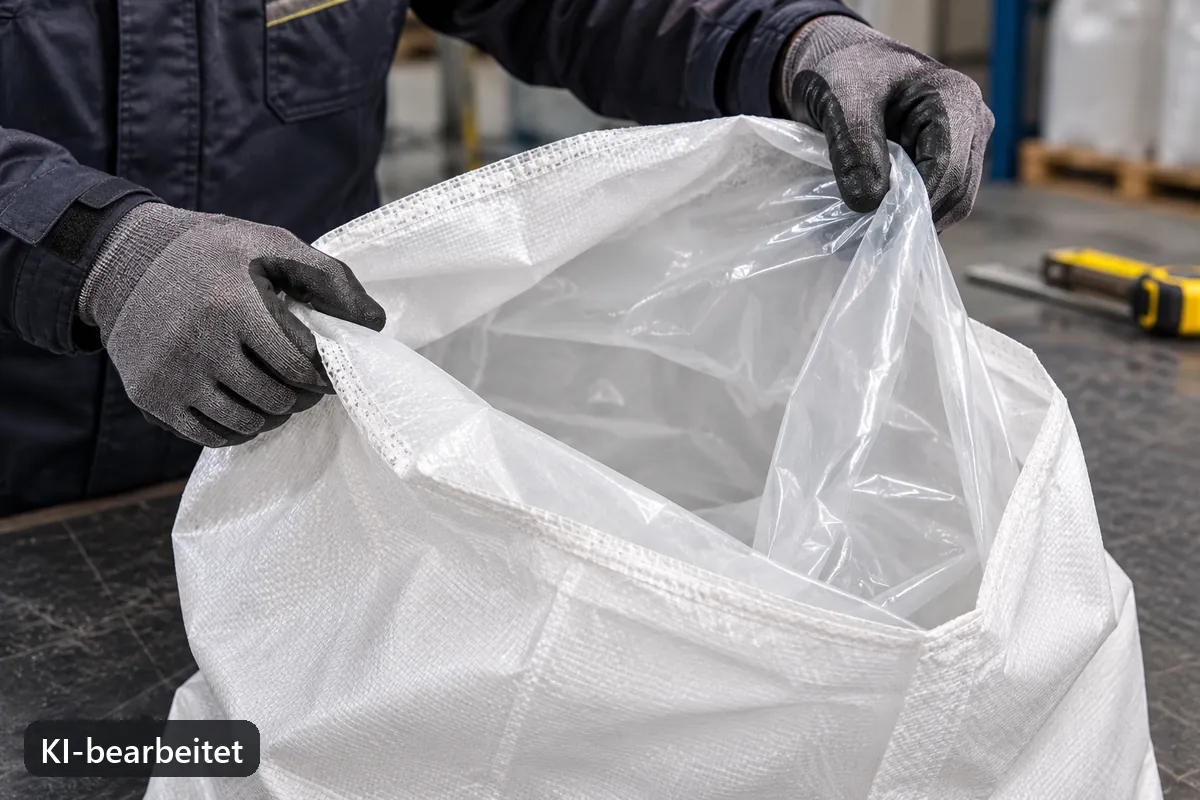
A liner made of polyethylene (PE) is inserted into the bag. It improves tightness and separates the material from the fabric. In our range we carry PP flat bags with PE liner (e.g. PPFB70PE with 30 µm). For big bags, liners are a matter of specification.
Fabric weight
The data sheets give fabrics between 50 g/m² (flat bag) and 180 g/m² (special big bag). A higher weight per unit area generally means higher strength but is only one feature among several. For load capacity, construction, seams and loops count just as much.
Electrostatics: type A to D
Big bags for areas with combustible dusts or solvent vapours are classified by electrostatic behaviour into types A to D (IEC 61340-4-4). Without special antistatic equipment, a big bag corresponds to type A. We do not carry dissipative types in the standard range. If you have this requirement, tell us the material and environment: we clarify the version with you and the manufacturer.
Which version for which condition
| Condition | Recommendation | Examples from the range |
|---|---|---|
| dry, coarse material, covered storage | uncoated is enough | BB45T, BB60T, BB90T, BB902T, BB90U |
| rain, damp material, outdoor storage | coated | BB70, BB90, BB901 |
| dust is to be retained | coated, closed with skirt or lid | BB70, BB90, BB901, BBA90, BBA901 |
| more tightness for flat bags | PE liner (25 to 30 µm) | PPFB70PE, PPFB60PE |
| asbestos waste, packaging with liner | uncoated with PE liner or coated, ask the waste disposal company | BBA90, BBA90PE, BBA901, BBA135, BBA260 |
| combustible dusts, solvents | type B, C or D after checking, not standard range | specification, see Chemicals |
Fabric weights in the range
| Fabric weight | Items |
|---|---|
| 50 g/m² | PPFB70PE, PPFB60PE |
| 60 g/m² | PPFBM140, PPFBM140U, PPFBM100 |
| 125 g/m² | BBA90PE, BBA620PE |
| 130 g/m² | BB45T, BB60T |
| 170 g/m² | BB901 |
| 180 g/m² | BBS001, BBS002, BBS003, BBS004 |
The data sheet does not give a fabric weight for every item. Where it is missing, we confirm the value on request. If fabric weight matters to you, compare only items whose data sheet states the value.
Liner thicknesses in the range
We state PE liners in micrometres (µm) where the data sheet gives them: BBA90PE (50 µm), BBA620PE (50 µm), PPFB70PE (30 µm), PPFB60PE (25 µm). For other items the data sheet says only “PE liner” without thickness. A thicker liner is more robust and tighter, a thinner one lighter and more flexible. Which thickness suits your material depends on sharpness, moisture and tightness requirement.
UV, storage and ageing
Polypropylene fabric ages in sunlight and loses strength as it does so. Coating and liner do not change this. Store filled and unused bags dry and protected from UV, especially if they stand for longer. For permanent outdoor use, discuss storage time and loading with us in advance.
How to recognise the version
In the catalogue the “Fabric” column shows for each item whether it is coated or uncoated and, where applicable, fabric weight and liner. The “Fabric” filter separates the two groups. On the product page the information is in the heading and under “Technical data”. If an item says “on request”, we confirm the version before your order.
What the coating does not do
- It does not replace a UN approval: our items are not designated as UN packaging.
- It does not make the fabric UV-resistant: sunlight still weakens polypropylene.
- It is no statement on tightness against liquids: the data sheet speaks of protection against the ingress of moisture.
Three scenarios
Dismantling outdoors: the bags stand in the yard for several days; rain is possible. Coated bags such as BB90 or, for asbestos, BBA90 protect against the ingress of moisture. The skirt is tied shut after filling. Uncoated bags such as BB90T are the second choice here.
Dry indoor store: coarse, dry material such as crushed stone. Uncoated bags are enough; they are mostly open and quick to fill (BB90T, BB902T).
Bulky mineral wool in flat bags: the large format PPFBM140 (140 × 220 cm, coated, 60 g/m²) with drawcord in the hem takes bulky insulation. Where more tightness is wanted, we carry PE liner variants such as PPFB70PE (30 µm).
Frequently asked questions
Is a coated bag without liner enough for damp material?
According to the data sheet, the coating protects against the ingress of moisture. For very damp or wet material a liner may be necessary. That depends on the material and belongs in the specification.
Can I insert a liner into a big bag afterwards?
A liner is inserted into the bag. For big bags this is a matter of specification because the size and shape of the liner must match the bag.
Are uncoated bags dust-tight?
No. Uncoated fabric is air-permeable. For fine, dusty materials use coated bags or liners and clarify tightness in advance.
Sources and date
- Item data: product data sheets of DS SafetyWear Arbeitsschutzprodukte GmbH (coating, fabric weight, liner).
- IEC 61340-4-4: electrostatics, classification of big bags into types A to D.
As of: 23 October 2026. General technical information, not legal advice. The data sheet, label and the requirements of your waste disposal company or client take precedence.